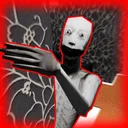
Keep the Door Locked Long Limbs Visitor
Disproportionately long arms on the hallway feed are the tell. Lock the door.

What the long limbs visitor is
The long limbs visitor is a confirmed Keep the Door Locked visitor anomaly. A guest with extremely long arms appears at the door. The proportions are wrong in a way that is hard to miss once you look at the camera feed. The visitor is hostile. Lock the door.
The tell depends entirely on the hallway camera. From the door frame view, the arms can look unusual but not unambiguously wrong. The hallway feed shows the full length of the visitor’s arms against the wall and carpet, where the unnatural stretch is obvious.
How to respond
- Pull up the laptop camera when a visitor arrives.
- Look at the visitor’s arms.
- If the arms are clearly disproportionately long, lock the door.
- Continue the run.
The camera is required for this anomaly. Without the camera, you may accept a long-limbs visitor by accident. Build the habit of opening the camera before every door choice — the long limbs check is one of four camera-only visitors (translucent guest, doppelganger, dead doppelganger, long limbs).
Common mistakes
- Trusting the door frame view alone. The arms only look unambiguously long through the camera.
- Accepting the visitor because the long arms are partially obscured by the staircase.
- Comparing the long limbs to a tall guest. The tell is the arm length, not the height.
- Closing the camera too quickly. Take at least two seconds to compare the arm length against the doorframe.
- Convincing yourself the visitor must be honest because they spoke at the door. Audio never confirms long limbs.
- Refusing every tall guest. Tall is not the same as long-limbed.
Why the camera is required
The hallway camera is the only place where the arms’ full length is visible. A door-frame peek only shows the upper body, which can hide the stretching. Pair the camera with the door-frame view to be sure. The hallway angle also catches the arms against a known background — the wall, the carpet, the staircase — so a stretched arm reading has a reference point.
Sample encounter
A knock comes in the middle of a window check. You pull up the laptop and see a visitor whose arms hang well past their knees and reach the bottom of the doorframe. The arms are not parallel to the body — they angle out slightly, as if the joints are set wrong. You lock the door. The visitor leaves. You return to the camera sweep and check the bathroom area because the next signal is often elsewhere.
Combine with other signals
Long limbs sits in the camera-only category alongside translucent guests, doppelgangers, and dead doppelgangers. The four together are the reason camera discipline matters more than any single anomaly knowledge. If you already open the camera for every door prompt to catch the doppelgangers, you have already caught the long limbs. The cost of the camera habit is small; the cost of missing one of these four is usually the run.
Related anomalies
- Translucent guest: see-through visitor identified by the camera.
- Doppelganger: doubled visitor identified by the camera.
- Dead doppelganger: lifeless second figure near the stairs, identified by the camera.
- Spasming limbs: visitor with flailing arms, visible without the camera.
The threat ranking groups body-distortion visitors together with the doppelgangers so the camera habit covers them all. The camera and door decisions guide explains how to keep the camera habit under pressure.
Frequently Asked Questions
Quick answers about the hotel room, visitors, and endings.
How do I spot the long limbs visitor?
Look at the visitor's arms on the hallway camera feed. Disproportionately long arms are the tell.
Can the door frame view confirm the long limbs?
Usually not. The camera is required to see the full arm length.
Is the long limbs visitor tied to an ending?
No confirmed ending tie. The visitor is hostile with no documented reward.
What if the arms are partly hidden?
Refuse the visitor by default. A partial view cannot rule out long limbs.
Why does the camera matter for long limbs but not spasming limbs?
Long limbs requires seeing the full arm length against a hallway background, which only the camera shows. Spasming limbs is violent motion you can see at the door frame.