Keep the Door Locked Ceiling Spiders
Move out from under them. The egg sacs detonate and cost sanity when they explode.
What the ceiling spiders are
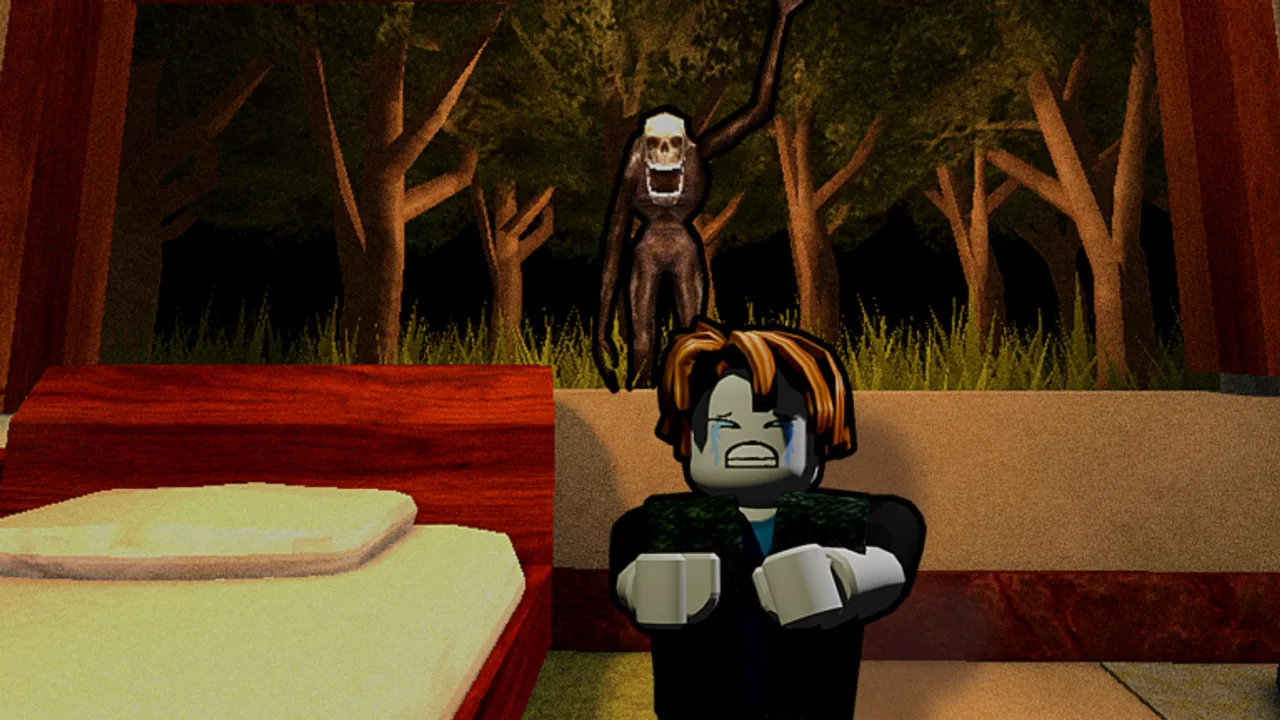
The ceiling spiders are a confirmed Keep the Door Locked room anomaly. Giant spiders with large egg sacs on their backs roam the ceiling throughout the night. They appear randomly. After a short while they make a noise and explode, dealing sanity damage to anyone standing directly under them.
The spiders are one of the few anomalies that punish positioning rather than identification. There is no tell to read or camera check to make. The defence is purely spatial: do not stand beneath a spider when they detonate.
How to respond
- Glance at the ceiling every few seconds.
- If a spider is overhead, step away from its position.
- Stay clear until the spider explodes.
- Return to your usual position only after the explosion resolves.
The spiders are fast but predictable. They hang, build up an audible cue, then explode. Once you hear the tell, you have roughly a second to step aside. Build the ceiling glance into your general room scan — door, camera, window, toilet, ceiling, room — so the habit fits without disrupting other checks.
Sanity impact
A spider explosion that catches you under it costs sanity. The Losing It badge confirms that sanity can reach zero. Avoid chancing close calls during long runs.
- Step out the moment you hear the explosion cue.
- Do not gamble on whether the spider is close enough to matter.
- Treat the ceiling check as a calm habit, not as a panic response.
How it fits into the loop
Spiders are nuisance anomalies, not ending-blockers. They appear throughout every run, regardless of route. The practical habit is to add a ceiling glance to the room scan you already use for window, toilet, and door. Do not invent a complicated spider schedule; the anomaly is purely positional.
Related anomalies
- Shadow figure: corner figure that you dispel with the flashlight.
- Spasming limbs: visitor anomaly that you lock out without delay.
- Long limbs: visitor anomaly that you lock out through the camera.
The threat ranking lists spiders as a moderate concern because they only matter when you are standing in the wrong spot.
Sample encounter
You are standing near the laptop working on a sanity check. Above your head, you notice a giant spider with an egg sac on its back. You take one step back. The spider makes a small noise, then explodes. The room is now safe to stand in again. Two minutes later, another spider appears above the door. You step away from the doorframe before the explosion. Both explosions are the same and the same habit works for both: do not stand under them.
Combine with other signals
The ceiling spiders sit beside the vent ghost and the room hider as room-position anomalies. They share the same response: do not stand in the wrong place. The hacked laptop warning also matters because a ceiling spider falling while your cameras are blocked is much harder to recover from.
Build the habit
Add a ceiling glance to your existing room scan after every door event. The habit only takes a second: ceiling, corner, vent, window, toilet, laptop, door. The order can be anything as long as the ceiling is in it. After a few nights, the ceiling glance becomes automatic and the spiders stop being a threat.
Why the ceiling scan is different
A ceiling glance is unusual because most survival games train players to look at the floor, the door, and the window. Keep the Door Locked adds a third axis: the ceiling. The habit of looking up is not natural for most players, and the spiders are designed to catch that gap. The fix is the same as the floor habit: add a fixed order that includes the ceiling, and repeat the order on every quiet scan. After a few runs the ceiling glance becomes automatic, and the spiders stop costing sanity.
A short note on movement
Players often ask whether running, walking, or crouching matters for the spider response. The answer is no: the spiders are positional, not timing-based. Whether you walk, run, or crouch, the response is the same: do not stand beneath the spider when it explodes. The visual cue is the only signal that matters, and the response is the only habit that matters. Train the visual cue and the response together.
A common misread
The spiders sometimes coincide with a knock at the door, which can pull your attention upward away from the door. The door and the spiders are separate events. The spiders do not care about the door, and the door does not care about the spiders. Practice the separation before relying on it, and keep the ceiling glance short so the door check does not get delayed.
Frequently Asked Questions
Quick answers about the hotel room, visitors, and endings.
How do I avoid the ceiling spiders?
Glance at the ceiling every few seconds and step out from beneath them before they explode.
Do the spiders kill you instantly?
No. They damage sanity. The Losing It badge confirms sanity can reach zero, so repeated hits matter.
Are spiders tied to a known ending?
No confirmed ending tie. They are nuisance anomalies that recur throughout a run.
Can I shoot them or use an item to remove them?
No item has been confirmed for this purpose. The defence is purely spatial.